


The “magician” who defrauded half of Europe
Edward Kelley
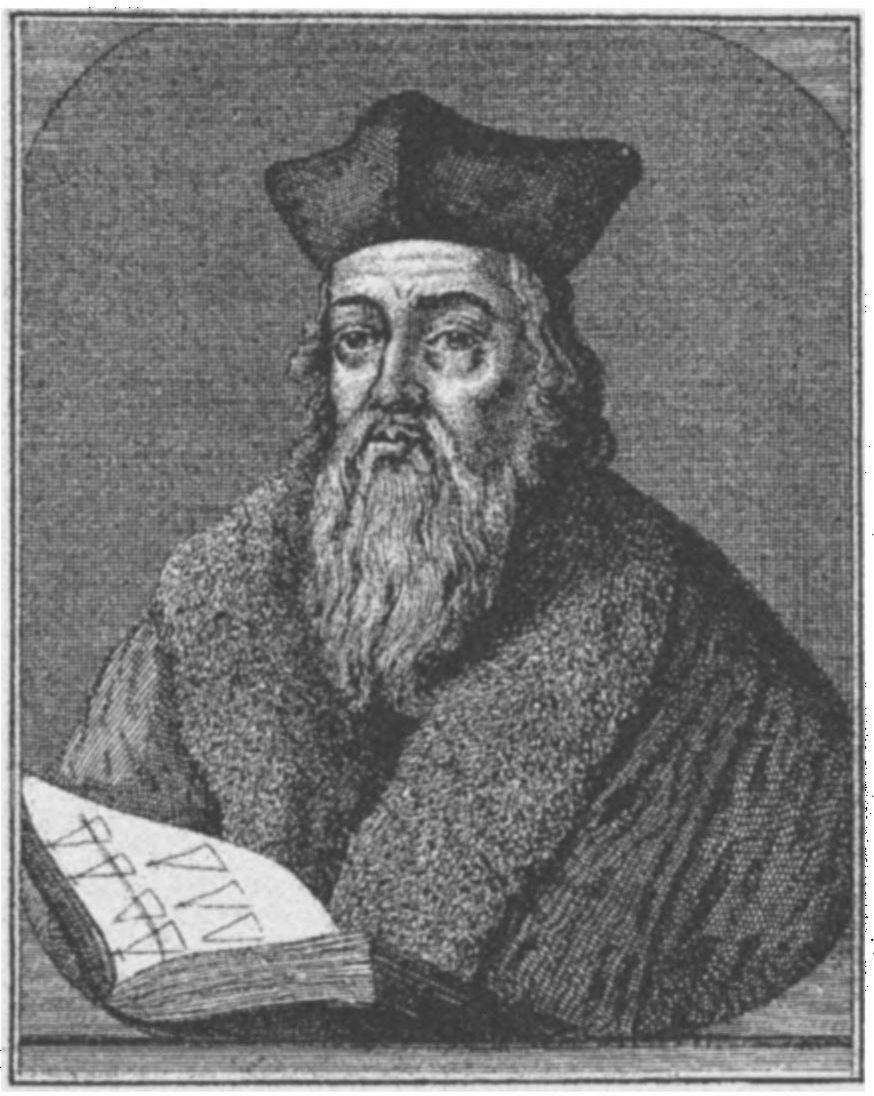
Portrait of Edward Kelley from Alchemy, ancient and modern by Stanley Redgrove, 1911 - wikimedia commons
A professional swindler, Edward Kelley began his career in Lancaster in the latter half of the 16th century, where he was convicted of fraud for passing off shaved gold coins as nuggets. From that time on, Edward always wore a black cap to hide his partially clipped ears. This mutilation did not deter Kelley, who, wandering around England with his rudimentary knowledge of magic and alchemy, promised to multiply the wealth of the unfortunate wealthy individuals who crossed his path, only to disappear as soon as their fortunes landed in his pockets.
His career took off when he was hired by John Dee, the famous astrologer at the court of Elizabeth I, to assist in his studies of angels. Dee, believing in Kelley's wild fabrications, ended up gaining worldwide fame. People from all over began flocking to the court to meet Dee and his associate. Among all the queen’s guests, the two chose their first victim in the form of the Polish Count Albert Lanski, who, deceived, agreed to host them in his palace to allow them to continue their research on the transmutation of lead into gold. Needless to say, every attempt ended in failure, as did the count’s finances, which were so depleted that he eventually kicked them out.
The pair then arrived at the Emperor's court in Prague, where after two years, due to witchcraft laws, they were forced to leave the city. From Prague, they embarked on a journey across half of Europe, which, thanks to Dee’s fame, allowed them to swindle as many nobles as possible, including the King of Poland and the Bohemian Count Rosenberg.
The "wonder duo" continued their scams until Dee decided to sever ties with Kelley. Edward then returned to Prague, where he was arrested, and after being released, fled to Germany, where he continued his activities until his final arrest in 1593. Thrown in prison, Kelley attempted to escape by lowering himself out of a window with bedsheets, but he fell, suffering fractures that led to his death within a few weeks. This time, his final swindle cost him dearly.
- G., L., Margheriti, I personaggi più misteriosi della storia, Newton Compton Editors, Rome, 2015.
Scarpato Deborah - Master's student - Ca' Foscari Venice
2026-02-07
Salvatore Ciccarello