


Photius of Constantinople
Twice Patriarch between East and West
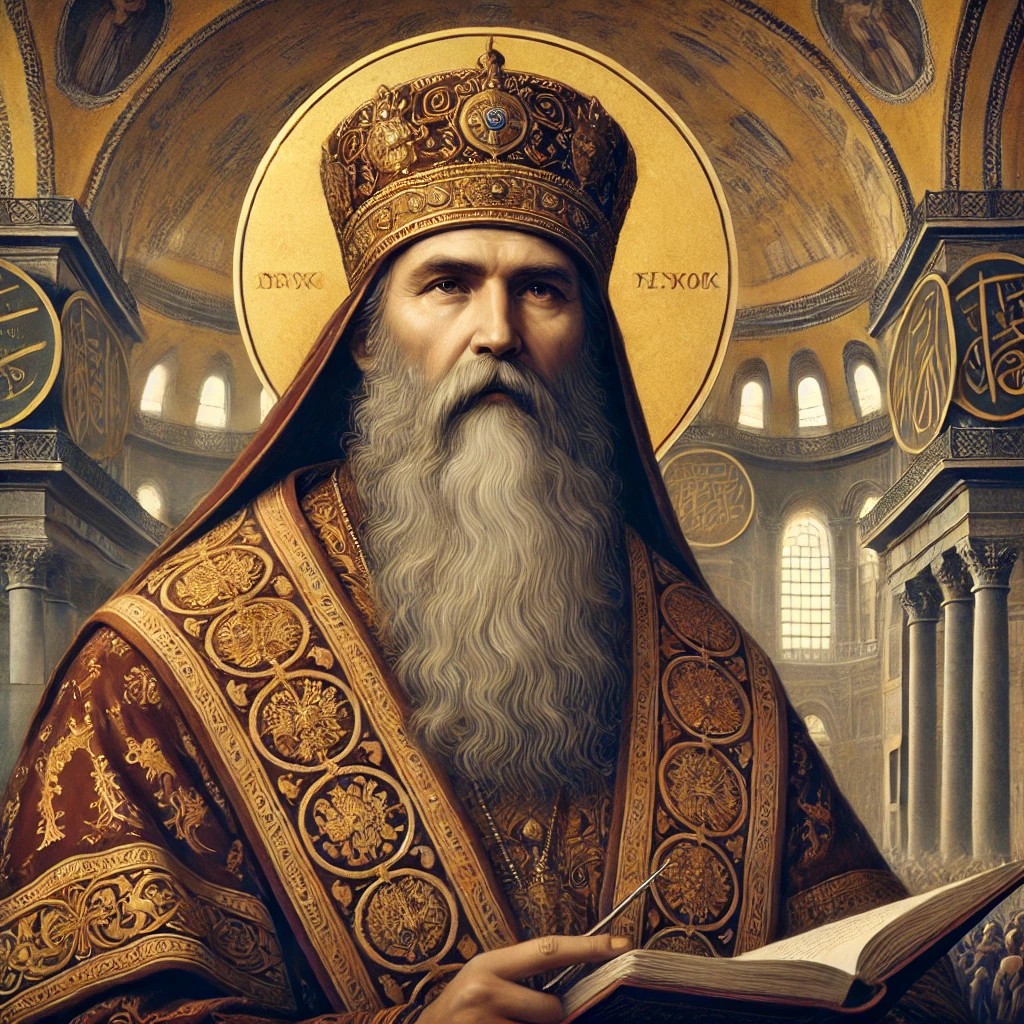
Photius Patriarch of Constantinople - Image created with AI
A man of vast erudition, head of the imperial chancellery, and a layman, Photius was appointed Patriarch at a time of imperial power fragility. The government was controlled by the uncle of the heir to the throne, Michael III, the Caesar Bardas, who deposed & exiled the previous Patriarch, Ignatius, accusing him of conspiracy for his loyalty to the young sovereign’s mother, Theodora.
In 858, Photius ascended to the patriarchal throne, receiving holy orders within 5 days & being consecrated on Christmas Day. Supporters of Ignatius, outraged by an election that was anything but canonical, appealed to the Pope. Meanwhile, Michael III, encouraged by Photius, convened a council on the issue of religious images in 860-861, which ultimately confirmed Photius’ authority.
Shortly after, due to religious disputes in Bulgaria, Pope Nicholas I convened a synod in the Lateran, excommunicated Photius, & reinstated Ignatius. In 867, Photius responded by calling a council on the Filioque controversy, during which he excommunicated the Pope, accusing him of heresy. Everything seemed to be going well for the Patriarch - until a peasant of Armenian origin arrived from Macedonia & changed everything: Basil I, the future emperor.
Upon ascending the throne, Basil immediately forced Photius to step down, as he was closely associated with the previous regime, & reinstated the former Patriarch, Ignatius. Photius was subsequently exiled to the Monastery of Skepi. A few years later, during the famous Council of Constantinople of 869-870, which ratified the imperial decision, Photius was definitively excommunicated.
Photius managed to regain imperial favor & returned to the patriarchal throne upon Ignatius’ death in 877. He annulled all previous synodal & conciliar decisions, making his past troubles seem like a distant memory. But his fate took another turn.
When Basil I’s son, Leo VI, came into conflict with his father & was accused of conspiracy, Photius sided with the reigning emperor - a decision that would cost him dearly. Upon Basil’s death in 886, Photius was once again forced to abandon his position & was exiled to the Monastery of Bordi in Armenia, where he died in 893.
J-C., Cheynet, Il mondo bizantino. L'Impero bizantino (641-1204), ed. it. edited by S., Ronchey, T., Braccini, Turin, Einaudi, 2008.
Deborah Scarpato - Master's student in History and Classical Literature - Ca' Foscari University of Venice
2026-03-18
Salvatore Ciccarello