


William I crowned German Emperor... reluctantly
The story of the struggles of the ruler destined for the highest office in the newly formed Germany
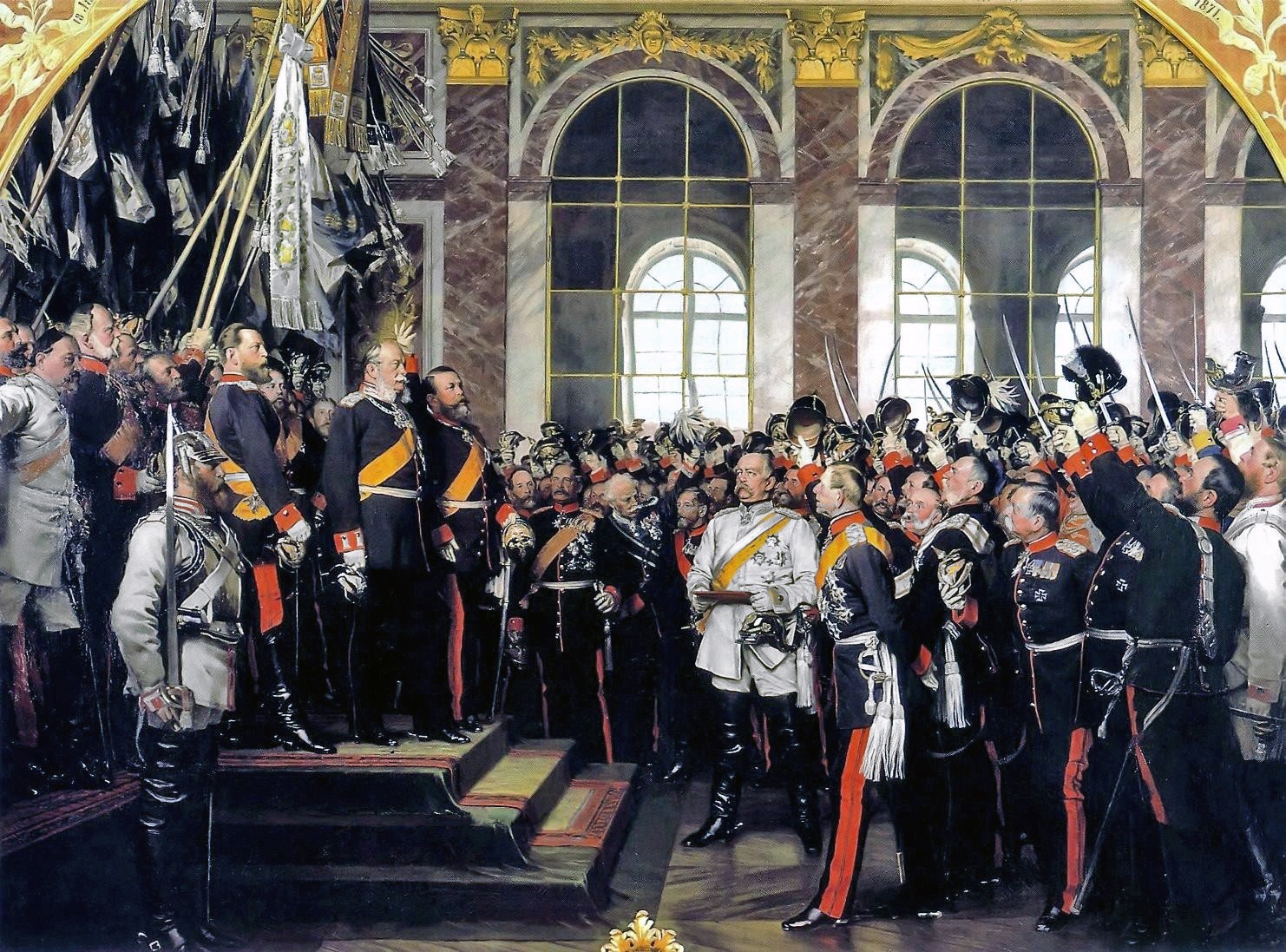
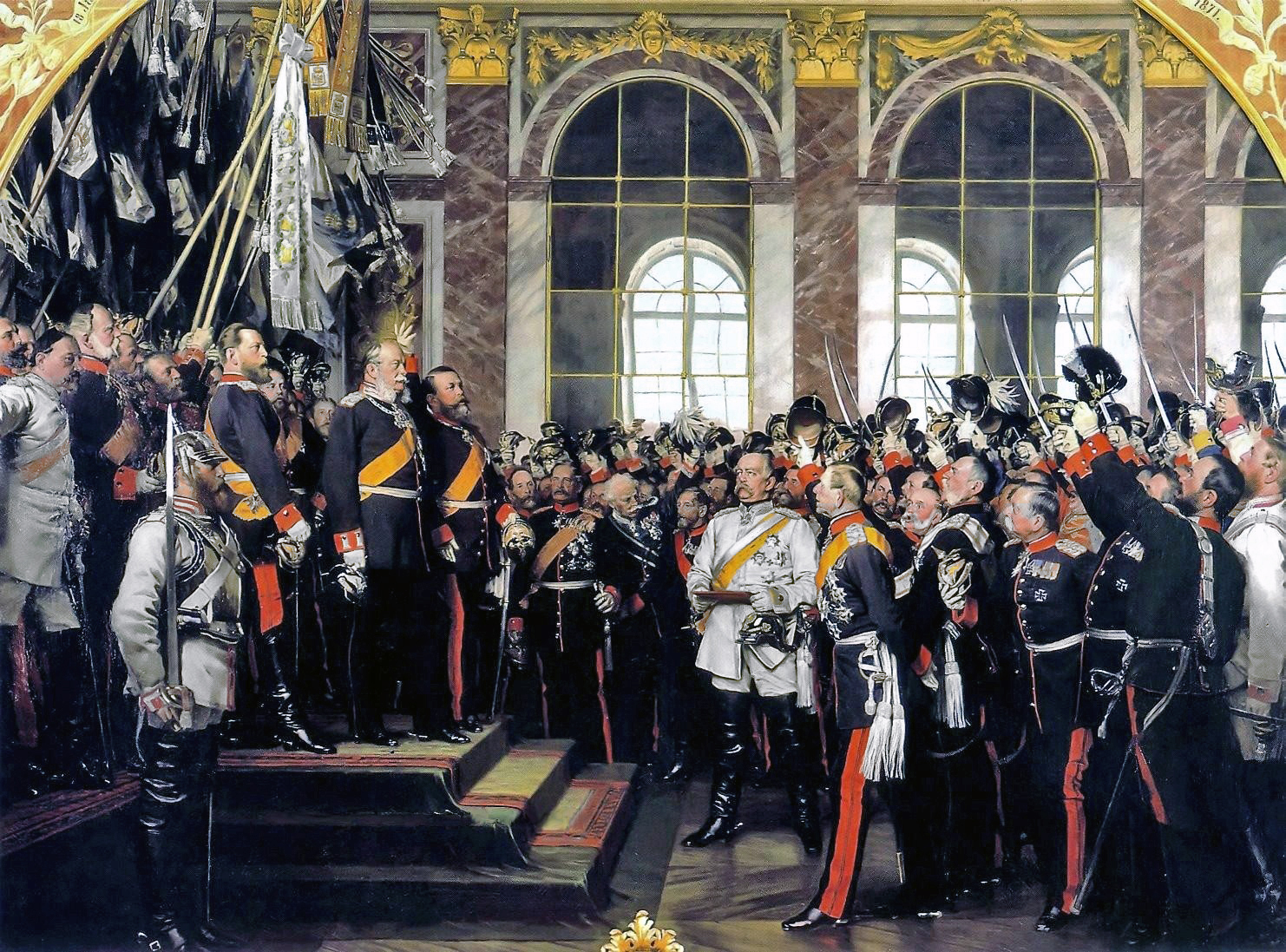
The coronation of William I in the Hall of Mirrors at the Palace of Versailles, with Bismarck, dressed in white, at the foot of the podium. - Wikimedia
On 1 January 1871, the federal constitution of a united Germany, agreed upon by the German states following Prussia's military victory over France, came into force. It stated that 'This confederation shall bear the name of the German Empire' and that 'The presidency of the confederation shall be held by the King of Prussia, who shall bear the title of German Emperor'. The Emperor who was about to be crowned was King William I of Prussia, but he was not enthusiastic about it. A staunch Prussian and legitimist at heart, he did not intend to place the title of 'King of Prussia', which he held 'by the grace of God', above that of 'German Emperor', which he would hold by the will of the princes. Furthermore, Prussia and the Empire, formerly represented by Austria, had often been at odds, and the idea of a united Germany was often associated with revolution from below.
Otto von Bismarck, head of the Prussian government, was decisive in the final choice, as he had to take into account the fact that it was easier to unite Germany than to bring together the Prussian territories of northern Germany and the anti-Prussian southern Germans under an 'enlarged Prussia'. He was forced to make concessions, particularly to Bavaria, which retained its own diplomatic service and military authority in peacetime, but above all to the fact that the King of Prussia, in his capacity as Emperor, would be only a sort of 'president' among the German princes, with powers only in foreign policy, defence and war.
William would have liked to remain ruler of an enlarged Prussia, but he could also have accepted the title of 'Emperor of Germany', since this title attested to Prussian supremacy in Germany. However, Bismarck declared that the title of German Emperor, which did not confer any right of sovereignty over the whole of Germany, would be the maximum claim he could make to the King of Bavaria. On 17 January, in an informal meeting between William and Bismarck, the former stated that he wanted to become 'Emperor of Germany' or not become emperor at all, but Bismarck replied that this was no longer possible, as the imperial statute was already in force. After an initial violent outburst by the sovereign, during which he considered abdication, he wept bitterly and accepted the state of affairs. The next day, 18 January, William was crowned German Emperor in the Hall of Mirrors at the Palace of Versailles, surrounded by all the German princes.
Franz Herre, "Kaiser Wilhelm I: der letzte Preuβe", Kiepenheuer & Witsch, 1993.
Diego Monaci
2026-06-24
Francesco Toniatti