

Vikings and Tattoos
The symbolism of tattoos in Norse/Pagan culture
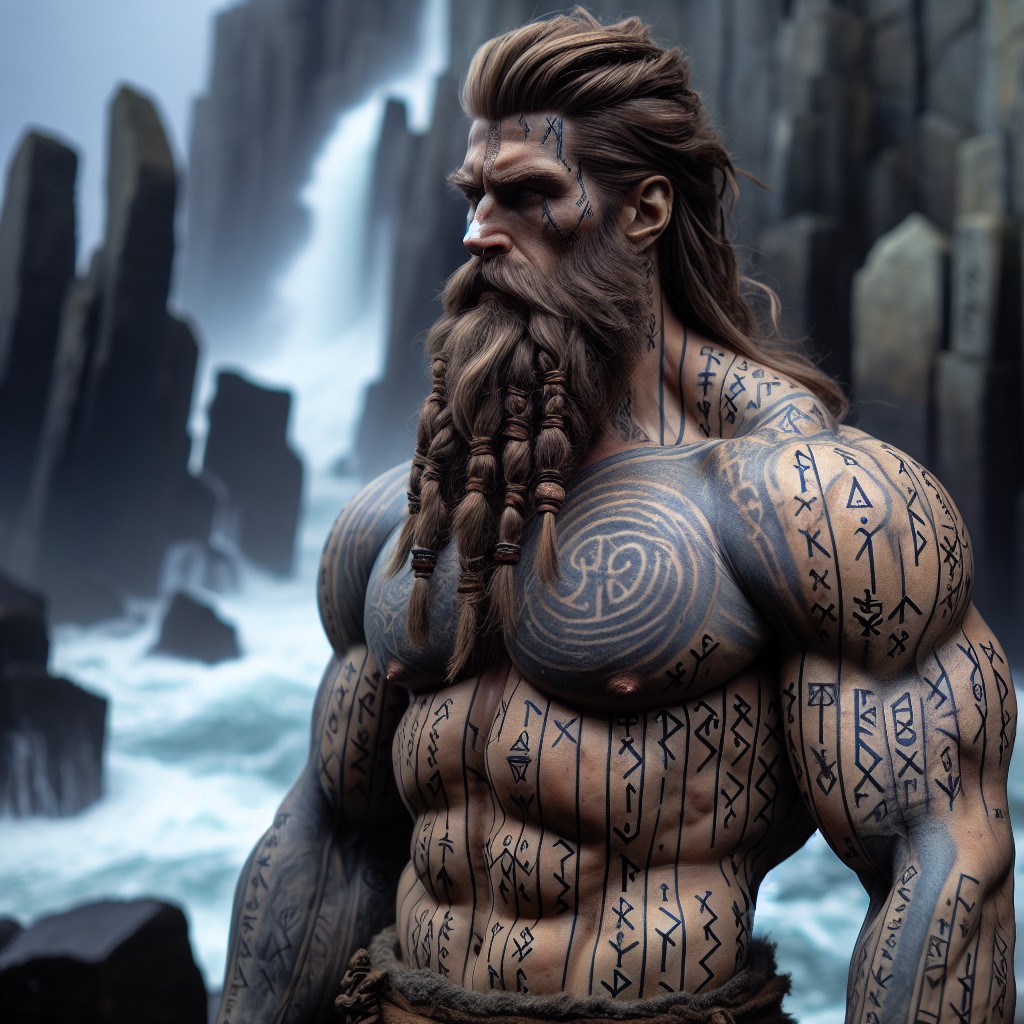
A Viking with nordic runes tattooed on his body - AI Generated Image
Unlike Christian or Roman culture, where tattoos were viewed as undesirable or used for punishment (marking slaves), Viking, Celtic, and Germanic cultures, as well as non-European traditions, considered them a source of pride. Warriors tattooed religious symbols on their arms, faces, & bodies, believing that the placement and specific design could bring personal blessings or misfortune to the enemies. Vikings commonly adorned their bodies using the “stick and poke” technique, manually inserting ink or similar substances into the skin. The tattoos included runes symbolizing fortune, health, and strength, as well as more complex designs such as the following:
1) Horned Triskele (Triple Horn): Symbol associated with the god Odin, representing three interwoven drinking horns, used for beer or mead. It signifies loyalty to the gods (Ásatrú in Icelandic) through ritual toasting, as well as wisdom, since the mead horn is linked to Kvasir, the wisest of the Vanir gods. According to legend, Kvasir’s sacrifice led to the creation of the Mead of Knowledge. Those who bore this tattoo were believed to gain wisdom.
2) Shield Knot (Protection Knot): Used by the Celts and various other ancient cultures, this symbol was intended to provide protection in battle and represented the four corners of the world. In its Norse variant, often accompanied by a black circle (symbolizing the sun, akin to a swastika), the interwoven corners created an intricate design symbolizing interconnected strength.
3) Vegvísir: Maritime compass, depicted at the center of the design, surrounded by the Miðgarðsormr (World Serpent). The symbol ensured safe passage at sea, secure return to port, and guidance back home, making it particularly favored by sailors. The surrounding serpent represented the entirety of the world, as Norse mythology described it as so vast that it encircled the Earth and bit its own tail.
4) Ægishjálmur (Helm of Terror): Known as the "Helm of Awe," the symbol was engraved beneath helmets to grant strength in battle. Dating back to around 1000 AD, it consists of the rune Y repeated 8 times. It remains popular, particularly among Icelanders, as a mark of protection and power.
Régis Boyer ,La vita quotidiana dei Vichinghi (800-1050), Rizzoli, 2017
2025-10-19
Salvatore Ciccarello