


The conspiracy against the Pope
Benedetto Accolti's plan
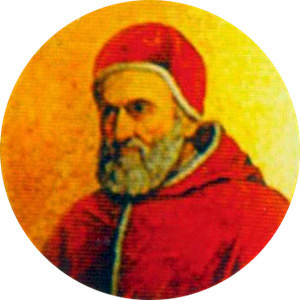
Portrait of Pope Pius IV in the Basilica of Saint Paul outside the walls in Rome ( Wikicommons )
The Council of Trent represents one of the pivotal moments in the history of the Catholic Church. Convened in 1545, the council was called in response to Martin Luther's Protestant Reformation. In these times of change for the Christian world, the figure of the Pope was more central than ever. Angelo Medici, who would go down in history as Pope Pius IV, was a Pope closely allied with the rulers of the time, assisting in quelling the Protestant revolts occurring across various countries. He was the Pope who brought the council to a close in 1563, and, against his will, fell victim to a conspiracy in 1564.
Benedetto Accolti, the illegitimate son of Cardinal Pietro Accolti, was a young religious fanatic who had lived in Switzerland and decided to carry out a plan to assassinate the Pope who had brought the Counter-Reformation to its peak. Accolti, a man endowed with great oratory skill, managed to convince several individuals to join him. These men were disgraced nobles: Count Antonio Canossa, Taddeo Manfredi, Giangiacomo Pelliccione, and Prospero de' Pittori. Accolti persuaded them that he had received a divine revelation, according to which Pius IV needed to be assassinated so that a more orthodox and better Pope could take his place. The plan was to gain an audience with Pius IV in the signature room and stab him with a poisoned stiletto wrapped in a black cloth.
The plot fell apart because one of the conspirators, Giangiacomo Pelliccione, frightened by the possible consequences, decided to confess everything. Some of the conspirators were imprisoned, while others, like Benedetto Accolti, were sentenced to death after torture and interrogations. This episode perfectly illustrates the turmoil of the post-Tridentine Christian world. Accolti confessed that he had been influenced by Protestantism in plotting this conspiracy, even though the initial motive described by the other conspirators suggests an attack on a Pope considered too lenient toward Protestantism.
Elena Bonora, 1564. La congiura contro il papa , Laterza Editions, 2011
LA Muratori, Annali d'Italia dal principio dell'era volgare sino all'anno 1750 , Florence, 1827
2026-02-13
Salvatore Ciccarello