


A case of medieval castration: Abelard
The restless life of the Breton philosopher and his tormented love with Eloisa
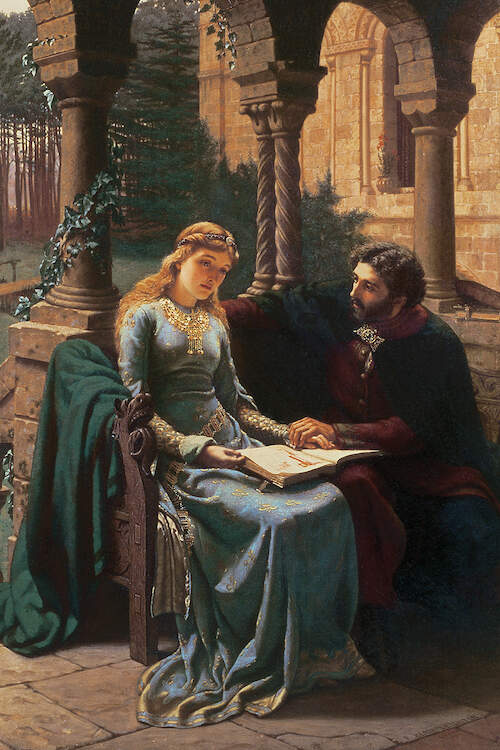
19th century painting by Edmund Blair Leighton of Heloise and Abelard: their story had a considerable following in that century - Wikimedia
Peter Abelard is often discussed more in the context of medieval philosophy than in history, remembered as a challenger to Bernard of Clairvaux and for his role in the debate on universals, a philosophical clash between realists and nominalists. Rather than aligning with either side, Abelard chose to critique both positions. This critical stance reflects a personality inclined toward debate, which earned him few allies. His contentious nature was particularly evident when, after being expelled from Saint-Denis, he became abbot of Saint-Gildas in Brittany. There, the monastic rule was largely disregarded: the monks welcomed women into the cloister and engaged in hunting. Abelard’s efforts to restore discipline met with resistance so extreme that he faced a poisoning attempt in Nantes.
However, Abelard is most famous for his love affair with Heloise. Heloise, the niece of Fulbert, a canon at Notre-Dame, was a brilliant sixteen-year-old who received Abelard, about twenty years her senior, as her tutor. Their romance blossomed during their lessons at her uncle’s home, eventually becoming a celebrated literary motif, especially in the nineteenth century. When their relationship was discovered, the two were separated but continued meeting in secret until Heloise became pregnant and gave birth to a son, whom they named Astralabe. Attempting to salvage the situation, Abelard married her in secret, but when Fulbert publicized the marriage, Heloise denied it, going against her uncle’s wishes. Abelard then sent her to a convent in Argenteuil without making her take vows. This move was misinterpreted by Fulbert, who believed Abelard intended to abandon Heloise. Seeking revenge, Fulbert and some of his relatives bribed a servant of Abelard’s and broke into his room, where they castrated him.
Persuaded not to retaliate, Abelard chose to withdraw to a monastery, where he continued his philosophical debates and reflections. He insisted that Heloise take monastic vows, and the two would never see each other again, maintaining only an epistolary relationship. In his autobiography, Abelard scarcely mentioned his beloved after these events.
Mariateresa Fumagalli Beonio Brocchieri, Eloisa e Abelardo, Roma, Laterza, 2014, pp. 35-66, 123-130
2026-01-04
Salvatore Ciccarello