


The Tentacles of the OVRA
Mussolini's secret police
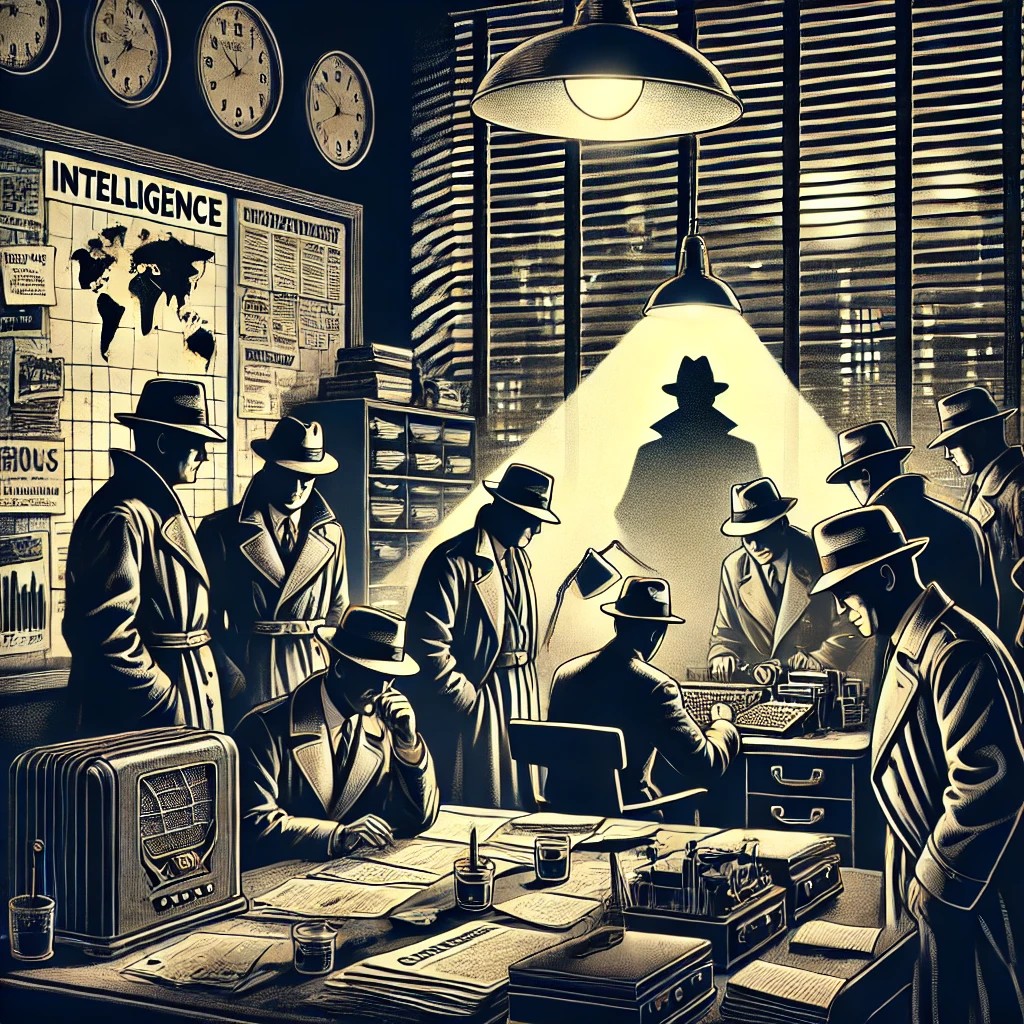
The OVRA: the secret police of the fascist regime, an efficient repressive machine that infiltrated Italian society, persecuting dissidents and opponents. Its legacy remains a warning about the dangers of totalitarianism - Image generated with IA
While in Hitler's Third Reich operated the fearsome Gestapo and in Stalin's Soviet Union the NKVD, in Mussolini's Italy the OVRA, Organisation for the Vigilance and Repression of Antifascism, was established. Created to crush Mussolini's opponents, the OVRA became an effective weapon of the fascist regime in the repression of dissent. After the Matteotti murder in 1924, the need for tighter control over institutions by the newly elected fascist regime led Mussolini to organise this new repressive machine.
In 1927, under the command of police chief Arturo Bocchini, the OVRA was born. Unlike the traditional police it operated in the shadows, it was a secret apparatus made up of a dense network of spies and informers who began to infiltrate Italian society in a capillary manner. This secret police adopted methods such as the mass filing of political dissidents, eavesdropping, tailing and surveillance of individuals considered dangerous. After their identification, dissidents were often arrested and deported to remote places such as the islands of Ventotene and Ponza. Antonio Gramsci is one of the most notorious persecuted by the OVRA because of which he was arrested.
It is estimated that the OVRA had around 5,000 informers throughout Italy. divided in turn into specialised sections to counter socialist groups, trade unionists, Jews and Freemasons, or university intellectuals. From 1927 to 1943, when it was dismantled, the OVRA was responsible for the arrest of almost 6000 anti-fascists. With the fall of Mussolini and his retreat to northern Italy in 1943, the OVRA was dismantled although many of its members continued to work for the newly founded Fascist Republic of Salò and some of their techniques were retained.
The fact that several members of the defunct OVRA, who later joined Salò, were later reintegrated into the secret services of the Italian Republic became the subject of controversy and debate. Even today, the memory of the OVRA allows us to understand how dangerous the repressive machine of totalitarian states is, cold and dehumanising.
Sito: Italo G Savella. “Arturo Bocchini and the Secret Political Police in Fascist Italy.” The Historian 60, no. 4 (1998): 779–93. jstor.com, consultato in Febbraio 2025.
Mimmo Franzinelli. I tentacoli dell'OVRA: Agenti, collaboratori e vittime della polizia politica fascista. Torino: Bollati Boringhieri, 1999.
Toniatti Francesco
Master of Arts in International Relations - University of Leiden
Master of Arts in History and Oriental Studies - University of Bologna
Former History Teacher - International European School of Warsaw
2025-10-22
Francesco Toniatti