


The Alma-Ata Conference
A New Approach to Global Health
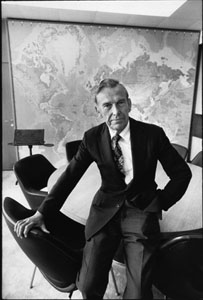
A picture of Halfdan Mahler, three times director of the WHO - WikiCommons.
In 1978, a World Health Organisation conference was held in the city of Alma-Ata (then in the former Soviet Union, now in Kazakhstan), which was to prove decisive for the fate of global health. WHO Director-General Halfdan Mahler had accepted the invitation of the Soviet Union, which had every interest in showing off its advanced medical care system to the countries of the world, especially in the bipolar context of the Cold War. In reality, Mahler was not very convinced by the Russian system: although very effective, it was a vertical system that did not involve local communities in developing solutions to their problems that could take into account their specificities. It was a model imposed from above based solely on scientific knowledge and without any consideration of the needs of each individual community. In fact, from his previous experience in India, Mahler had developed the belief that it was essential that health services met the needs of local communities and were established with the participation of these communities; in essence, he was highly critical of vertical health systems imposed from above. The Alma-Ata Declaration (the document that was drafted at the end of the conference) outlined a new model, that of "Primary Health Care": the aim was to involve local communities more closely in defining their own concept of health - now no longer conceived simply as the "absence of disease" - and in establishing appropriate health services. According to Mahler and the proponents of this approach, health would be the basis for future socio-economic development. Thus, it was not economic development that would improve health conditions, far from it; now, in order to ensure the effective economic development of local communities, it was first necessary to provide them with basic health and hygiene conditions, also with the aim of reducing inequalities. This document, although ambitious and difficult to implement, contributed to the development of medical knowledge that took into account social and cultural variables in the provision of health services.
Randall Packard, A History of Global Health, Baltimore, Johns Hopkins University Press, 2016.
2025-11-09
Giacomo Tacconi